

When a Rhode Island worker gets hurt on the job, the path to recovery isn’t just medical, it is legal too. That’s where the Rhode Island Workers’ Compensation Court steps in, ensuring every injured employee receives fair benefits, fast hearings, and a system that works without costly legal hurdles.
This court is created by the General Assembly in 1991, this specialized court stands as a model for how states can deliver efficient and compassionate justice for workplace injuries. Check out what’s this court is, how it works, key updates, how to file, what to expect, why it matters, etc. details from below.
Rhode Island Workers Compensation Court
The Rhode Island Workers’ Compensation Court ensures fair, efficient justice for injured workers. Created in 1991, it handles thousands of cases yearly, helping employees secure benefits quickly while balancing employer rights through a specialized, transparent legal process.
Led by Chief Judge Robert M. Ferrieri, the court manages disputes through pretrial conferences, trials, and appeals; resolving over 70% of cases within a month. Its structure, including a Medical Advisory Board and Appellate Division, keeps standards high and rulings balanced.
With over 8,000 petitions filed annually, Rhode Island’s Workers’ Compensation Court remains a national model for efficiency and compassion. Its continuous reforms, expert judges, and medical oversight ensure timely benefits, rehabilitation, and fairness for every injured worker across the state.

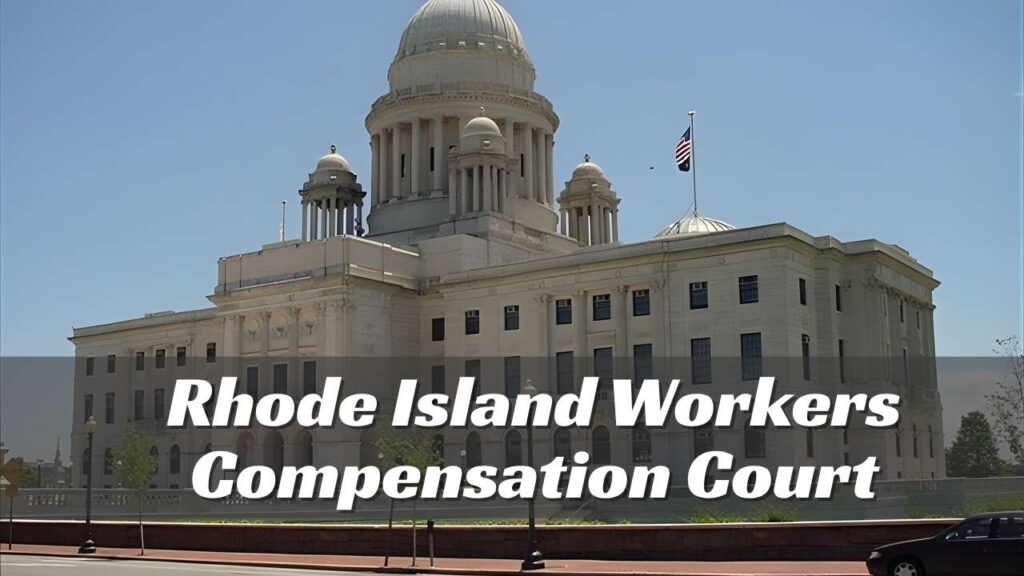
RI Workers Compensation Court Top Highlights
| Details On | Rhode Island Workers Compensation Court |
| Established In | 1991 |
| Established By | Rhode Island General Assembly |
| Chief Judge | Robert M. Ferrieri (since June 2016) |
| Administrative Judge | Steven A. Minicucci |
| Associate Judges | Robert E. Hardman, Michael Feeney, Alfredo T. Conte, & More Check Below. |
| Average Cases per Year | Over 8,000 |
| Resolution Rate | 70% of cases settled within one month |
| Location | One Dorrance Plaza, Providence, RI |
| Official Source | https://www.courts.ri.gov/ |
A System Design For Speed & Simplicity
The Rhode Island Workers Compensation Court was born out of reform. Before 1991, disputes over workers’ comp claims were tangled in slow-moving Superior Court proceedings. Today, this court operates as a user-friendly judicial branch with a concept it embraced long before the phrase became trendy. Its mission is simple but powerful –
- Deliver weekly benefits promptly to qualified workers
- Discontinue benefits when recovery occurs
- Keep the legal process affordable and accessible
Every claim starts with a pretrial conference, held within 21 days of filing. This early meeting helps employers and employees find middle ground fast, sometimes avoiding lengthy hearings altogether. If both sides can’t agree, a pretrial order is issued immediately, and the case can advance to a full trial if necessary.
Inside the Process: From Petition to Trial
Once a claim reaches the court, efficiency takes center stage. Here’s how it typically unfolds –
- Petition Filed – An employee or employer submits a claim about benefits or disputes.
- Pretrial Conference (within 21 days) – The first opportunity to resolve the issue quickly.
- Pretrial Order Issued – Sets temporary terms while awaiting trial, if needed.
- Initial Hearing – Streamlines the issues, confirms uncontested facts, and prepares for evidence presentation.
- Trial & Decision – The court follows Rhode Island Rules of Evidence, and a written decree is issued with findings of fact.
The goal? A smooth, fair, and cost-effective process where justice doesn’t get buried under bureaucracy.

Appellate Division: Built-In Balance and Oversight
Unlike most state courts, Rhode Island’s Workers’ Compensation Court includes its own Appellate Division, a three-judge panel that reviews trial outcomes. If a party disagrees with a ruling, they can appeal within five days. The Appellate Division then reviews the full record and decides whether to affirm, reverse, or modify the decision.
Only after that can a party request review by the Rhode Island Supreme Court, and even then, only through a Writ of Certiorari. This layered structure helps keep decisions consistent, transparent, and grounded in law.
Medical Advisory Board
Behind the courtroom, medical science plays a vital role. Since 1992, the Medical Advisory Board (MAB) has guided treatment standards for work-related injuries.
The MAB is made up of experts; orthopedic surgeons, neurologists, physiatrists, chiropractors, psychologists, and more who meet regularly to –

- Establish medical treatment protocols.
- Approve preferred provider networks.
- Oversee independent medical examiners and review teams.
This collaboration between law and medicine ensures workers get proper care and that disputes about treatment stay evidence-based, not emotional.
Why Court Matters to Workers & Employers?
For employees, the Workers’ Compensation Court is often the lifeline that prevents financial collapse after an accident. It ensures income replacement, medical coverage, and rehabilitation when injury strikes.
For employers, it provides clarity and fairness, ensuring that only valid claims move forward and that the process discourages fraud or delay.
In short –

- Workers gain stability and recovery support.
- Employers get a reliable, structured system that protects against abuse.
- Rhode Island benefits from reduced court congestion and a reputation for efficiency.
The Advisory Council
The Workers’ Compensation Advisory Council, established under G.L. § 28-29-30, serves as the system’s think tank. It includes voices from labor, business, insurance, and government; all working together to keep the law balanced and up-to-date.
Most major changes to the Workers Compensation Act pass through this council first. Their goal? Constant improvement to meet modern workplace realities.
Judicial Excellence
Rhode Island’s Workers’ Compensation Court is led by a dedicated team of judges who hear cases daily and bring decades of combined experience in employment and injury law. Daily Bench Leadership –
- Chief Judge – Robert M. Ferrieri
- Administrative Judge – Steven A. Minicucci
- Associate Judges – Hardman, Feeney, Conte, Fay, Cardoza Jr., Reall, Lazieh, Reynolds
Each judge hears live, in-person cases daily, ensuring that claims are handled promptly, not lost in digital queues or long delays.

Numbers That Tell the Story
| Update | Details |
| Annual Petitions Filed | 8,000+ |
| Cases Resolved in 30 Days | 70% |
| Appeals to Appellate Division (Annual Avg.) | Hundreds |
| Year Court Created | 1991 |
| Medical Advisory Board Meetings | Every 4 – 6 weeks |
These numbers highlight why Rhode Island’s system is often praised nationwide for speed, fairness, and focus.
A National Model For Specialized Justice
Few states have refined their workers’ comp systems as effectively as Rhode Island. By creating a dedicated court, the state ensured judges could develop deep expertise in injury law, case management, and rehabilitation policy.
That specialization translates into real-world impact; injured workers receive benefits faster, employers get fair hearings, and the state saves money by avoiding procedural gridlock.
Looking Ahead
The Workers’ Compensation Court continues to evolve with modern workplace realities, from mental health claims to remote work injuries. The system’s blend of medical insight, judicial discipline, and community oversight ensures it remains responsive to both people and progress.
Note – For updates, schedules, and rulings, visit the www.courts.ri.gov that is official website of Rhode Island Judiciary.
Justice at Rhode Island Workers Comp. Court
The Rhode Island Workers’ Compensation Court isn’t just a place for hearings, it is a pillar of fairness and recovery for thousands of local families every year. With efficient processes, expert judges, and ongoing reform, it stands as proof that justice can be both swift and compassionate.


