

The penny didn’t fade away, it exited with a clang that echoed through America’s financial history. Inside the Philadelphia Mint, under the buzz of heavy machinery and the weight of 232 years of tradition, the final one-cent coin was pressed into existence.
That moment officially closed the chapter on a coin that once represented the heartbeat of a young nation. What used to be the most forgettable piece of pocket change, tossed into fountains, lost in couch cushions, rattling around in jars; suddenly became a symbol of one of the most dramatic currency decisions in modern U.S. economics.
Now the minting presses rest, and the country is sorting through a farewell that’s equal parts emotional, practical, and long overdue. Get to know “How from pockets to history books, the American penny takes Its last bow” from below.
America Retires the One-Cent Coin After 200+ Years
The United States officially halted penny production after more than two hundred years, citing staggering manufacturing losses. Nostalgia is strong, but most Americans agree the move was inevitable. Existing pennies will continue circulating until they naturally fade out.
Online chatter is booming with debates, sentimental posts, and treasure-hunt excitement over rare editions. Retailers are shifting toward rounding systems, and collectors are rushing to secure historical pieces. The penny may gone from the Mint, but it explode back into public consciousness.
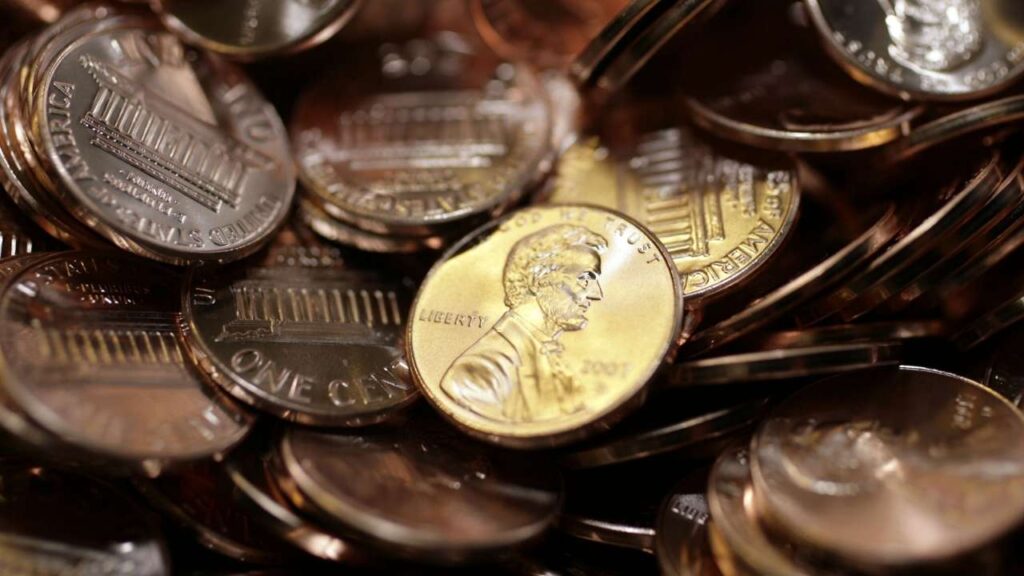
Key Highlights of Penny Retires After Centuries of Use in America
| Update On | U.S. Retires the Penny After 232 Years of Circulation |
| Reason for Ending | Nearly 4 cents to mint each 1-cent coin |
| Savings | About $56 million saved yearly |
| Legal Tender Status | Still valid nationwide |
| Public Reaction | Nostalgic, but largely accepting |
| Retail Shift | Rounding, exact-change incentives |
| Cultural Value | High, deeply rooted in American life |
A Coin Older Than Most Countries
Very few everyday American items have survived as long as the penny. First issued in 1787, influenced by Benjamin Franklin’s early ideas for national money, the one-cent coin predates vast portions of today’s global map.

Why Its Long Life Matters –
- It stood among the earliest markers of America’s independence.
- Its changing designs mirrored artistic shifts across generations.
- It endured wars, metal shortages, and leaps in minting technology.
For many, the penny isn’t scrap metal, it’s nostalgia in its purest form; childhood piggy banks, good-luck tosses, and phrases baked into American speech.
Why the Penny Had to Go?
Saying goodbye might tug at the heart, but the financial logic leaves no room for sentiment.
- The Hard Numbers –
- Each penny costs almost 4 cents to create.
- In 2024, the Mint lost roughly $85.3 million producing them.
- Inflation left the coin virtually powerless decades ago.
The penny had drifted from “useful currency” to “government expense wearing a familiar face.” Ending production is expect to spare taxpayers about $56 million every year, a figure Treasury officials could no longer shrug away.
When Sentiment Collides With Economics?
Still, pulling the plug wasn’t a purely mathematical move. Americans grew up with this coin. It crawled through pockets, sat in jammed supermarket trays, and starred in sayings like penny for your thoughts.

But nostalgia can’t offset inefficiency. What once simplified payments now regularly slowed them down. The decades-long question, “Should we keep minting the penny?” finally received its answer. The copper era is done.
The Moment the Mint Went Silent
The last strike took place at the Philadelphia Mint, watched closely by U.S. Treasurer Brandon Beach and Treasury Secretary Scott Bessent.
It wasn’t symbolic, it was the thunderous press of machinery marking the beginning of a new monetary reality.
Beach confirmed immediately “The penny will still count as legal tender, but its life from this point forward is limited to whatever remains in circulation.” And that final coin? Auction houses are already circling and the bids are expected to soar.
What Happens to Your Pennies Now?
Production has stopped, but the coin itself isn’t vanishing in a flash.

- What Stays the Same –
- Pennies are still legal tender.
- You can spend them anywhere.
- Banks will continue taking deposits.
- Collectors can still buy special issues.
- What Changes –
- No new pennies for everyday circulation.
- Some cash purchases may be rounded.
- Businesses dependent on tiny denominations may tweak pricing.
Nearly 250 billion pennies remain in circulation. Those will carry the torch until they naturally fall out of use.
A Coin That Once Bought Something Real
It’s wild to imagine that one penny once had true spending power, enough for:
- A biscuit
- A candle
- A piece of candy
- A newspaper (with a handful of them)
The economy evolved. The penny didn’t. A coin that once mattered now can’t even feed a parking meter. Ending the penny isn’t erasing history, it is accepting reality.
A Nation Reacts to the End of an Icon
Reactions across the country landed everywhere on the emotional scale. Some Americans feel the goodbye deeply, the penny lived in pockets, cash drawers, and school lunch lines for ages.
Others? They’re ready to move on. Retailers and cashiers have grumbled for years about the hassles the tiny coin created.

Voices from across the U.S. –
- “It reminds me of being a kid.”
- “Good riddance – it outlived its purpose.”
- “I still love collecting them.”
- “Rounding makes more sense.”
The response isn’t just economic. It’s cultural.
Retailers Adjust to a Penny-Free Supply Chain
The shift wasn’t flawless. Some businesses scrambled when pennies started drying up faster than expected.
Current Adjustments Include –
- Rounding systems at cash registers.
- Promotions for customers bringing in loose change.
- Charity drives for penny stockpiles.
- Discounts for exact-change payments.
Fast-food counters, convenience stores, and gas stations adapted the quickest, they were already drowning in coin clutter.
A Farewell Etched in American Memory
The penny isn’t just currency that made it through the centuries, it helped shape them. From the early “Flowing Hair” designs to Lincoln’s unmistakable profile, the coin evolved while its symbolism stayed the same.
Now, with production ended, the penny steps into a new role: relic, keepsake, historical fingerprint. Collectors are on alert.

Historians are digging into its timeline. And plenty of Americans are emptying jars at home, wondering whether a forgotten coin might suddenly be worth far more than one cent.
The US Strikes Its Final Penny & Closes a Chapter of History
The final penny already clatters off the press, but its story isn’t finished. What remains is a legacy built one tiny coin at a time; pockets jingling, jars filling up, and wishes flicked into fountains with a flick of a thumb.
- Now the penny lives on as memory and memorabilia.
- Collectors will chase it.
- Historians will preserve it.
- And plenty of people will discover forgotten handfuls tucked away in drawers.
As the United States steps into its cash-light future, the penny bows out with grace. It leaves behind a long, unmatched legacy, proof that even the smallest piece of money can leave an outsized mark on a nation’s story.