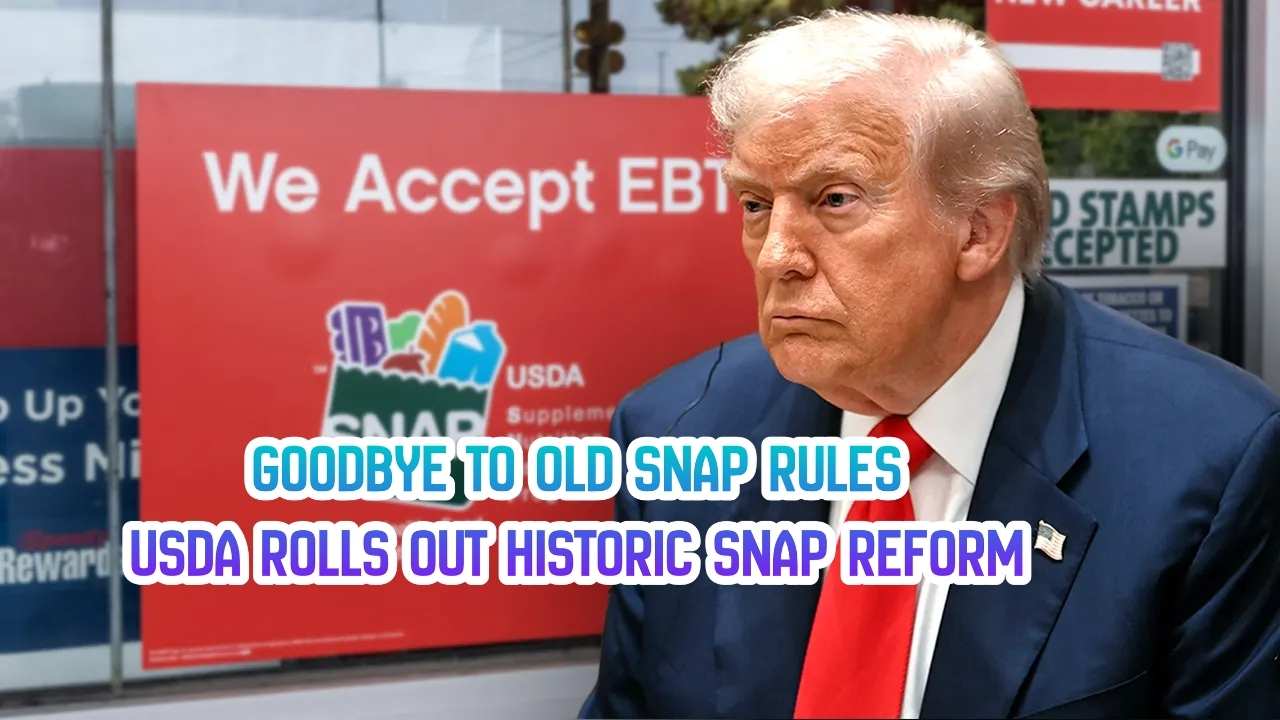

The SNAP overhaul hitting in November 2025 is shaking up how millions of Americans put food on the table. New rules tighten work demands, shrink exemptions, and redefine who truly qualifies for federal food assistance.
Under this revamp, age limits expand, verification hardens, and even families once considered safe from scrutiny face closer checks. The changes arrive amid funding pressure and mounting debate over the nation’s social priorities.
Officials call it modernization; critics call it austerity in disguise. As eligibility narrows and payments risk delays, the tension between fiscal discipline and basic nutrition turns into a full-blown national storyline.
Beyond Washington’s policy tables, the world is watching how the U.S. navigates hunger in an age of abundance. November 2025’s SNAP reset isn’t just paperwork, it is a test of empathy, economics, and endurance.
SNAP Rules November 2025 Bring New Eligibility & Reduced Benefits
America’s biggest food-aid program is under new orders this November 2025; tighter rules, leaner checks, and more red tape. For 42 million Americans who rely on the Supplemental Nutrition Assistance Program (SNAP), it’s shaping up to one of the most consequential months in the program’s history.
Between a federal funding crunch, shifting eligibility limits, and a fresh round of work-requirement enforcement, this year’s SNAP overhaul turns from routine adjustment into a national flashpoint.


The Money Shock: November’s Half-Sized Payments
According to USDA filings and multiple media reports, including The Hill, the government will fund only about half of the usual SNAP benefits for November 2025. A USDA memo reveals the agency will tap roughly $4.65 billion in emergency contingency money; carving out $450 million for state operations and $150 million for territorial aid to partially pay benefits.
That leaves households bracing for sharply reduced payments.
- Households of four, normally receiving about $994 a month, will see that figure slide toward $497 this cycle.
- Singles could get as little as $121 to $125, down from about $250 to $281 before the cuts.
- A two-person household might now receive around $340, depending on income.
All told, the government’s monthly SNAP budget; typically near $9 billion is being slashed by half.
The official explanation? Temporary fiscal constraints tied to a partial government shutdown and delayed budget resolutions in Congress. The USDA insists the measure is “emergency and short-term.” Critics counter that it could become the new normal if gridlock continues into winter.
Key Facts on SNAP Rules November 2025
| Category | Before Nov 2025 | After Nov 2025 |
|---|---|---|
| Work-Requirement Age Range | 18 – 54 years | 18 – 64 years |
| Dependent Exemption | Child under 18 = exempt | Exempt only if youngest child < 14 |
| Income Cap | ≤ 130 % FPL | Same cap, tighter checks |
| Payment Stability | Regular | Partial payments, possible delay |
| Time-Limit if Non-Compliant | Flexible by state | 3 months benefits within 36 months |
| Exempt Groups | Veterans, homeless, foster-youth exempt | Most exemptions narrowed |
Why the Change Matters Now?
November’s rollout is more than bureaucratic fine print. It is double blow, one part eligibility reform, one part funding cut; landing on the same population within weeks.

The funding squeeze alone will hit grocery carts across the country. For a family already budgeting around $25 a day in groceries, losing half that support can mean skipped meals or heavier reliance on food banks.
Meanwhile, the rule changes widen the scope of those required to work or train. Able-bodied adults without dependents (ABAWDs) aged 18 to 64 must now document 80 hours per month in approved work, job-training, or community service.
Failing to comply means a cap of three months of benefits over a three-year period, a timeline that many state agencies say is “logistically brutal” to track.
Cutting Into Cash: How Households Will Feel It
With only half the funds flowing, the USDA’s contingency pot will cover roughly 21 million people at full rate or 42 million at half. Either way, millions will face reduced deposits hitting their EBT cards this month. The reduction applies across all 50 states, D.C., Guam, Puerto Rico, and the U.S. Virgin Islands.
What this means in practice –

- States must re-calculate every household’s benefit using the “half-or-less” formula, an administrative marathon that could cause payment delays in several regions.
- The cap affects the maximum possible benefit, but households could still receive less depending on income, rent, or child-care deductions.
- Backlog risk; state eligibility systems already strained by the 2023 expansion will now process thousands of recalculations under shortened deadlines.
It’s the largest mid-month recalibration SNAP has attempted since the pandemic era.
The Human Math Behind the Policy
Let’s ground this in real dollars.
| Household Size | Typical 2025 Max Allotment | Estimated November Payment (50%) |
|---|---|---|
| 1 Person | $281 | ≈ $140 |
| 2 People | $516 | ≈ $258 |
| 3 People | $740 | ≈ $370 |
| 4 People | $994 | ≈ $497 |
| 5 People | $1,181 | ≈ $590 |
| 6 People | $1,406 | ≈ $703 |
| Figures modeled on USDA guidelines and state averages for 2025; amounts vary by region. | ||
Even modest differences, a hundred dollars here, two hundred there can translate to days without groceries. Local nonprofits in Texas, Ohio, and California report early spikes in pantry visits since the payment warning was issued in late October.
New Rules, Old Tensions
At the policy level, these SNAP revisions highlight the tug-of-war between promoting work and protecting the vulnerable.
Supporters of the change, including several fiscal conservatives in Congress, say the expansion of work expectations “encourages participation and personal responsibility”.

Opponents argue it ignores economic reality that in many rural areas, job opportunities and training programs are scarce, and low-wage workers with fluctuating hours may lose benefits even while employed.
Economists warn the ripple could reach far beyond low-income households. SNAP dollars typically circulate quickly through grocery stores, corner markets, and local farms. Halving benefits, even temporarily, could strip billions in consumer spending from regional economies this holiday season.
State Struggles: Implementation Chaos
SNAP is federal in funding but local in execution. Each state must verify compliance, monitor work hours, and recertify eligibility; all while recalculating November’s payment cap.
Some states are prepared. Others, not so much. Officials in smaller or rural states admit their case-management systems aren’t ready for the data load. Expect lagging deposits, glitches, and appeals flooding hotlines through December.
Adding to the chaos, the USDA has warned that unless Congress passes a supplemental funding measure, December benefits could face similar limits.

Global Eyes on the U.S.
The U.S. often serves as a benchmark for social policy design in developed economies.
Analysts from Europe and Canada note that this month’s combination of work-tightening and payment halving represents “an unprecedented dual stress test” for a welfare program of SNAP’s scale.
If America’s $9 billion monthly food-aid engine can stumble, they argue, it reveals a fragility common to many Western safety nets; especially as food inflation persists worldwide.
What Recipients Can Do Now?
- Check your state portal, confirm if your payment date or amount has changed.
- Track work hours and paperwork, states are now auditing compliance monthly.
- File for exemptions if pregnant, disabled, or caring for a dependent under 14.
- Plan short-term, grocery budgets should be built on 50 % of your usual benefit until the funding picture clears.
- Use community supports, local food banks and nonprofit “bridge” programs are expanding outreach through November.
The Bigger Picture: Between Policy & Plate
This month’s SNAP saga is more than a budget story, it is a mirror reflecting America’s unresolved debate over poverty and responsibility. Should aid demand proof of work, or should it guarantee survival first? Should states tighten oversight or expand compassion? The November 2025 adjustments bring those questions roaring back.
SNAP Program Faces Major Shake Up with New 2025 Rules
The U.S. SNAP system has always balanced on a delicate edge, a safety net and a symbol. This November, that net tightens.
For a family in Detroit, it means fewer groceries, For a policymaker in Washington, it is a fiscal data point, For millions of Americans between them, it is dinner or the lack of it.
Whether November 2025 is remembered as a brief funding hiccup or the start of a leaner era for food aid will depend on what Congress, and the country, decide next.